
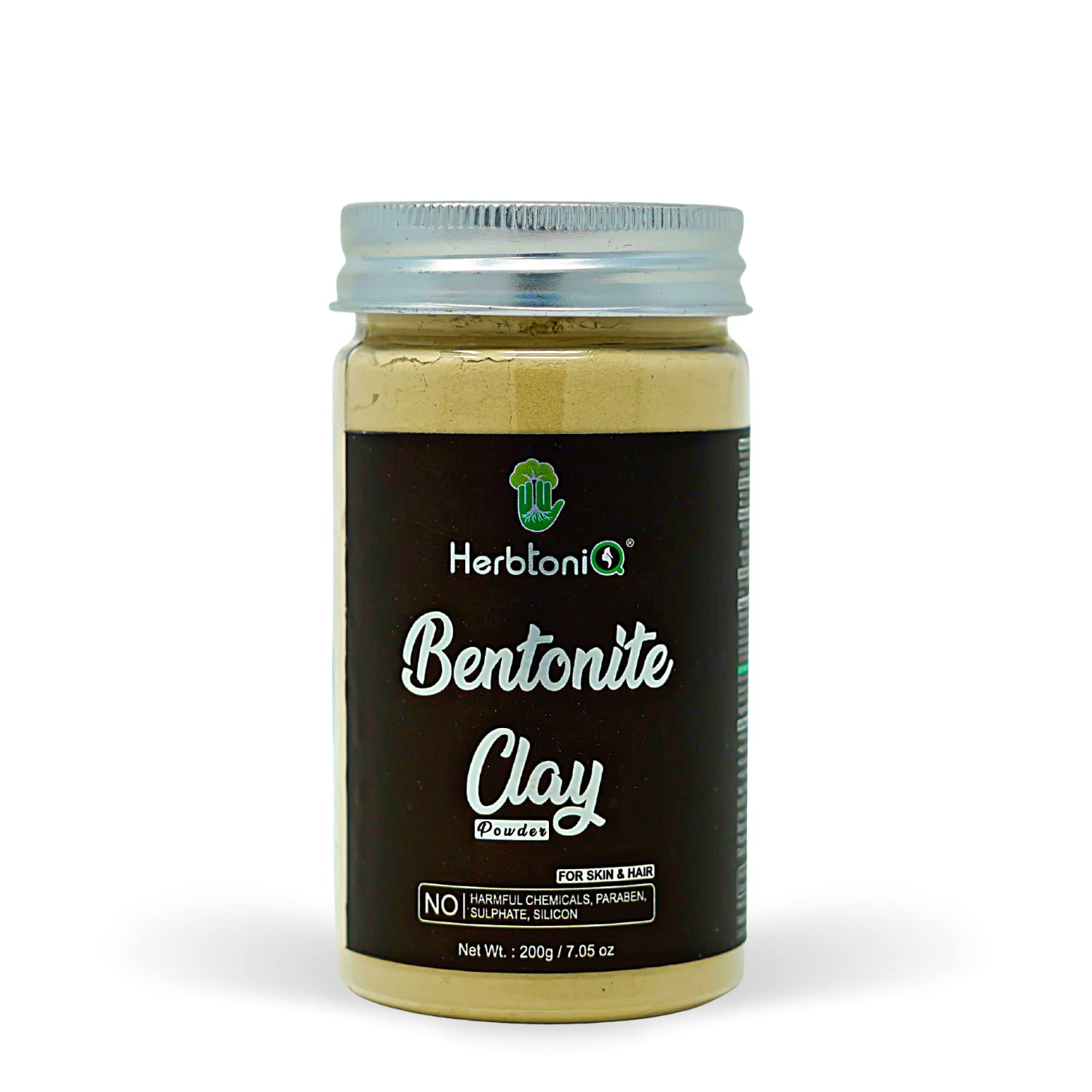
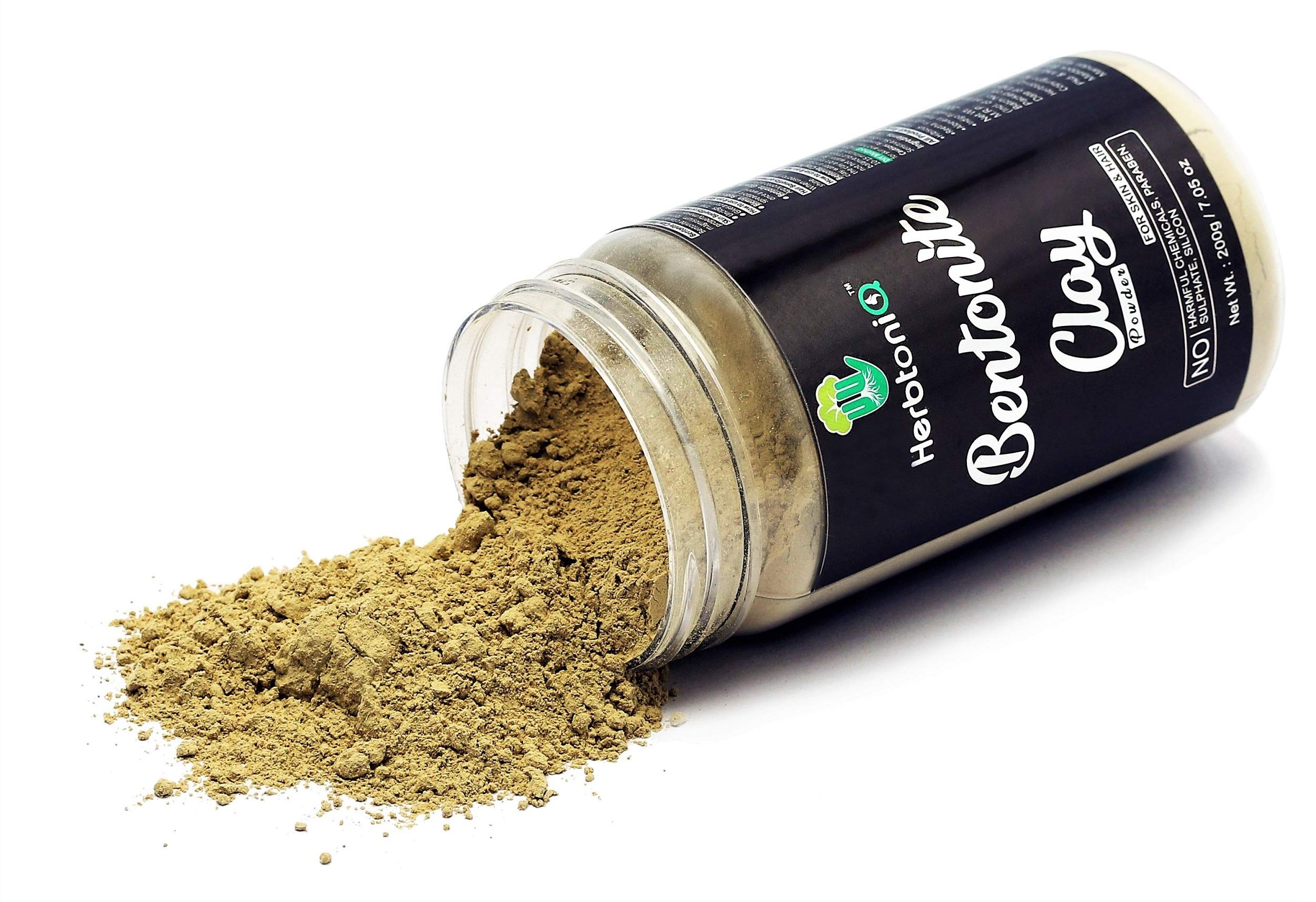
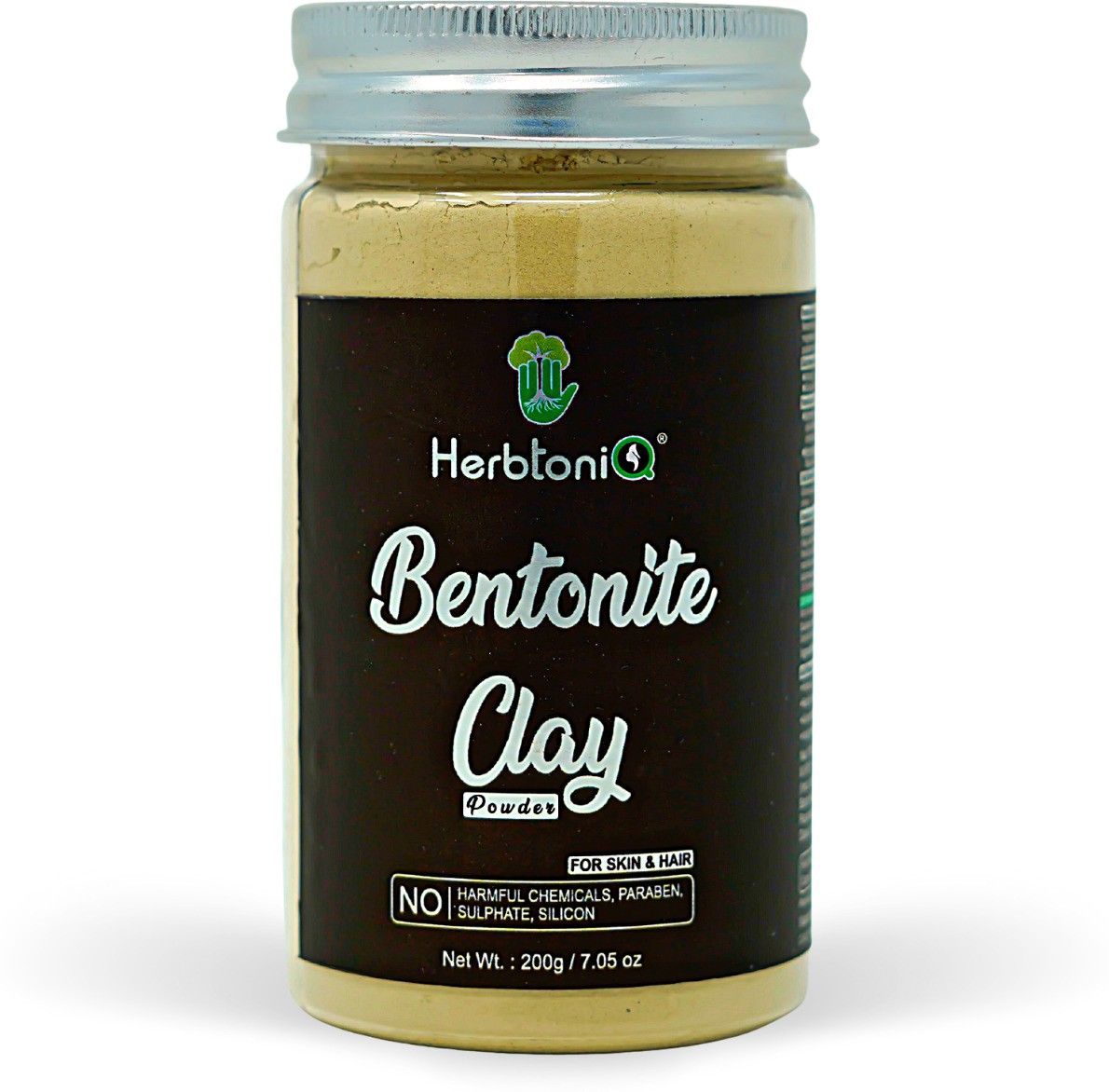
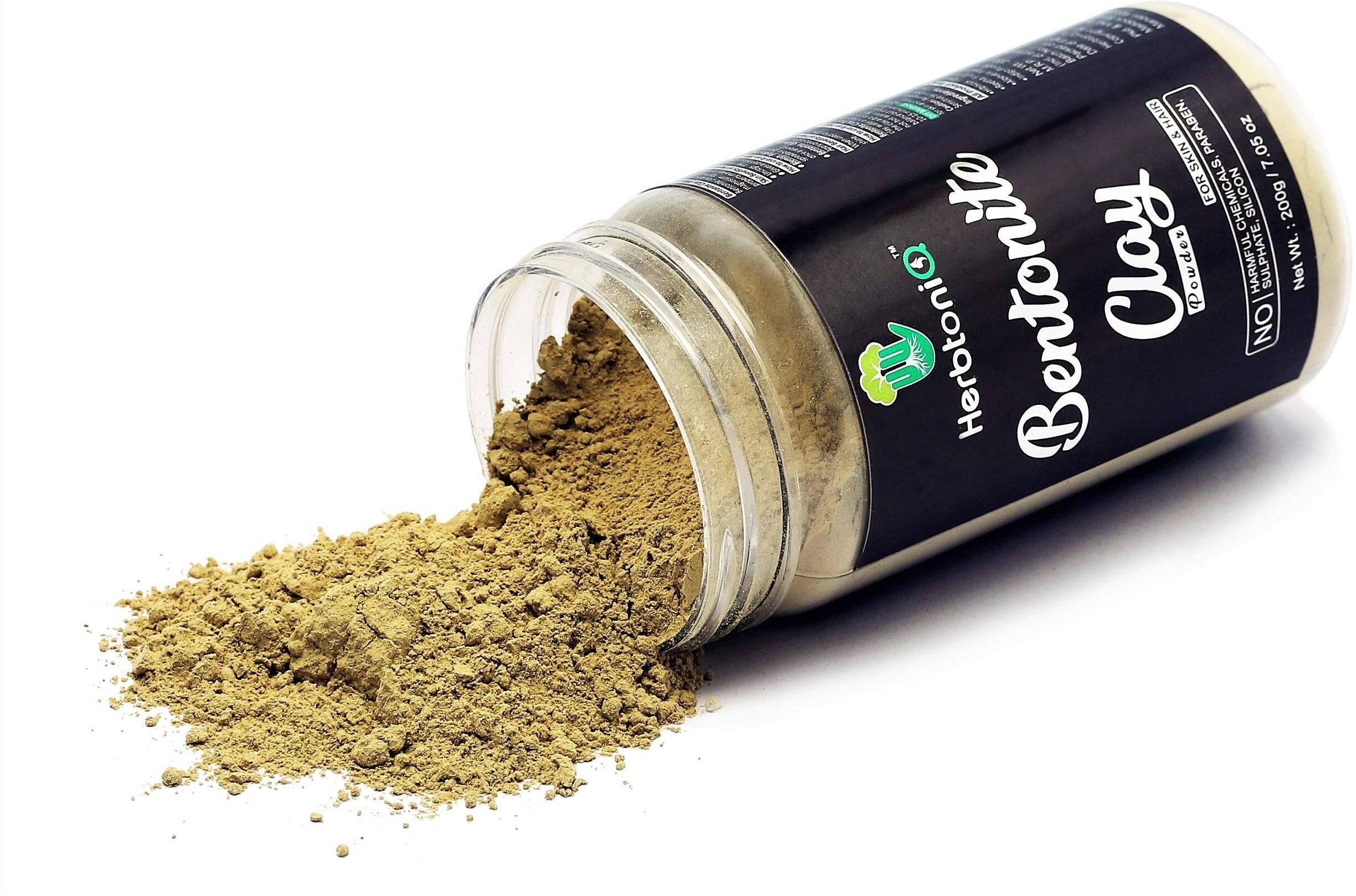
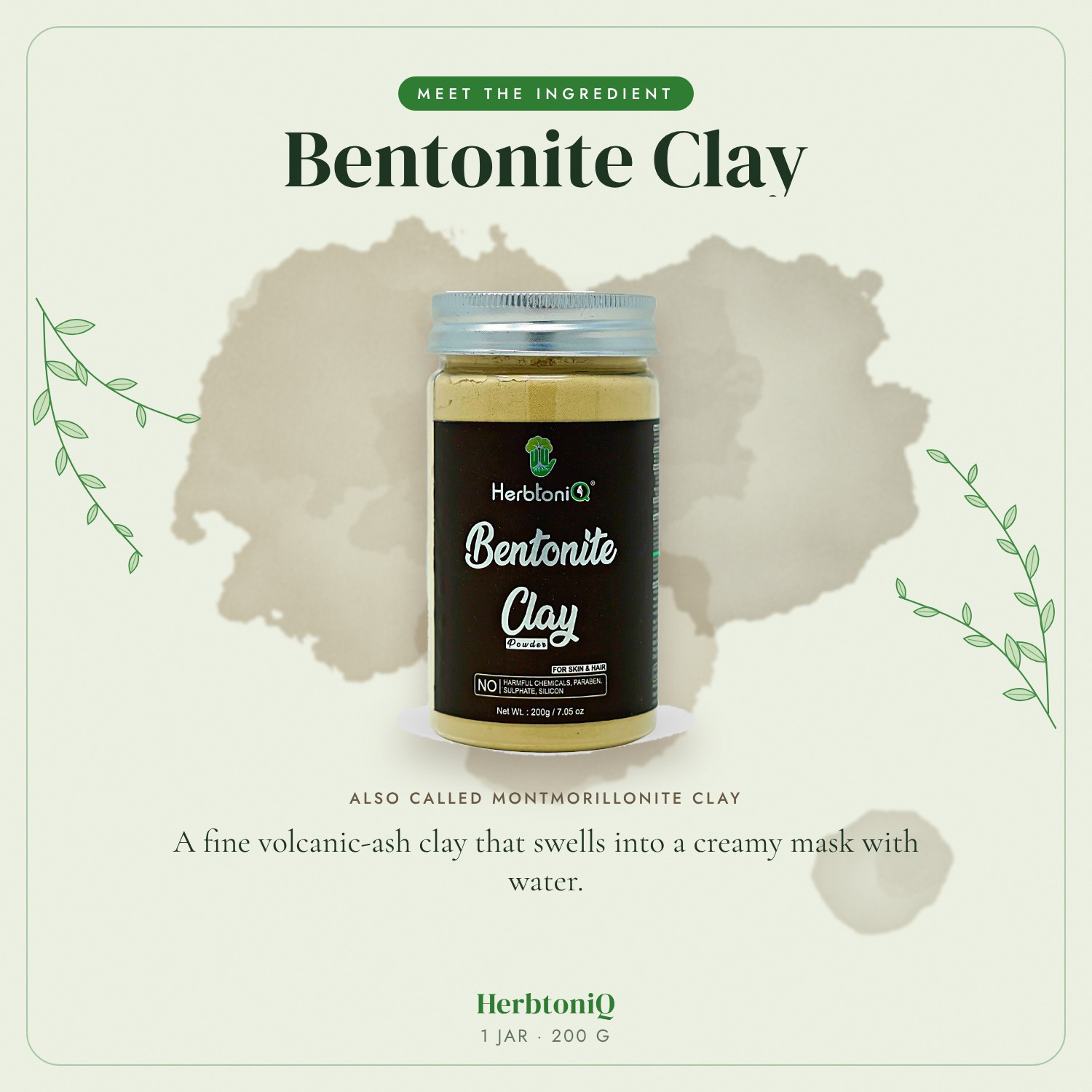
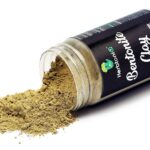
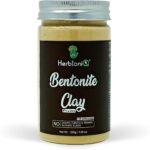
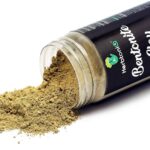
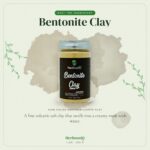

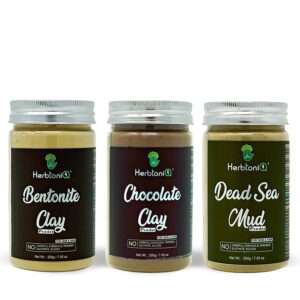
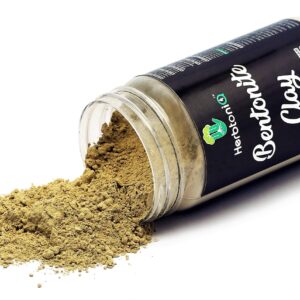
HerbtoniQ bentonite clay powder is a fine, grey-beige clay that turns into a thick, smooth mud the moment water touches it. It is one of the most widely used clays for DIY face masks, hair masks and body packs, and a little goes a long way.
Key Benefits
- Helps cleanse skin and remove dirt and excess oil.
- Leaves skin feeling smooth, fresh and matte.
- As a hair mask, helps lift oil and product residue from the scalp.
- Helps reduce frizz and leaves curls and waves feeling soft after a clay wash.
- Works alone or blended with other clays, aloe gel or rose water.
What’s Inside
1 plastic jar of Bentonite Clay, 200 g. Bentonite, also known as montmorillonite, is a naturally occurring clay with a very fine particle size and a strong ability to absorb water and oil. That is what gives a bentonite mask its familiar tightening feel as it sets.
How to Use
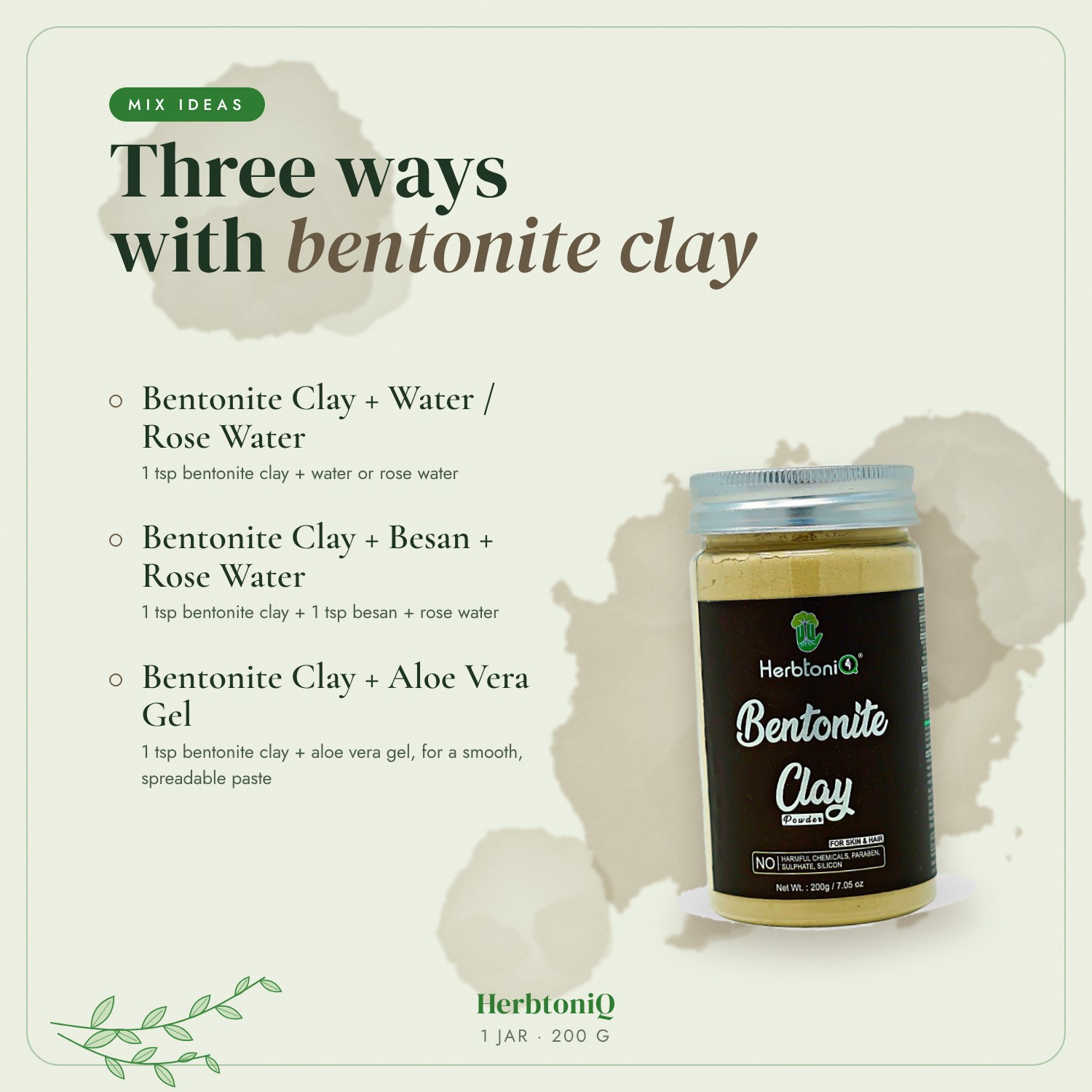
- Add 1–2 teaspoons clay to a glass, ceramic or plastic bowl; avoid metal spoons.
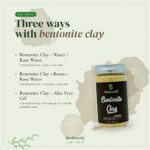
- Pour in water, rose water or aloe vera gel slowly, stirring until you have a smooth, yoghurt-like paste.
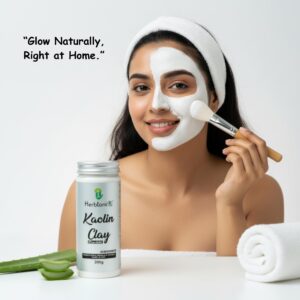
- Apply a thin layer on clean face and neck, avoiding the eyes and lips.
- Rinse with lukewarm water after 8–12 minutes, before it dries completely.
- Hair mask: mix 3–4 tablespoons, apply on damp scalp and hair for 20–30 minutes and rinse well.
- Do a patch test 24 hours before first use. Use once a week and moisturise after.
Who Is It For
For men and women with oily, combination or normal skin, and for wavy or curly hair routines that include a clay wash. Those with dry skin should mix it with honey or aloe gel and keep it on briefly.
Why HerbtoniQ
Single-ingredient clay with nothing added, finely powdered and hygienically packed in India in a resealable jar that keeps moisture out.
FAQs
How do I use bentonite clay powder for face?
Mix 1–2 teaspoons with water to a paste, apply for 8–12 minutes and rinse. Once a week is enough.
Can bentonite clay be left on overnight?
No. Rinse it off while it is still slightly damp; leaving clay on too long can make skin feel very dry.
Is bentonite clay the same as multani mitti?
Both are absorbent clays and are used in similar ways, but they come from different deposits and feel a little different on the skin.

For external use only. Do a patch test before first use.


Reviews
There are no reviews yet.