
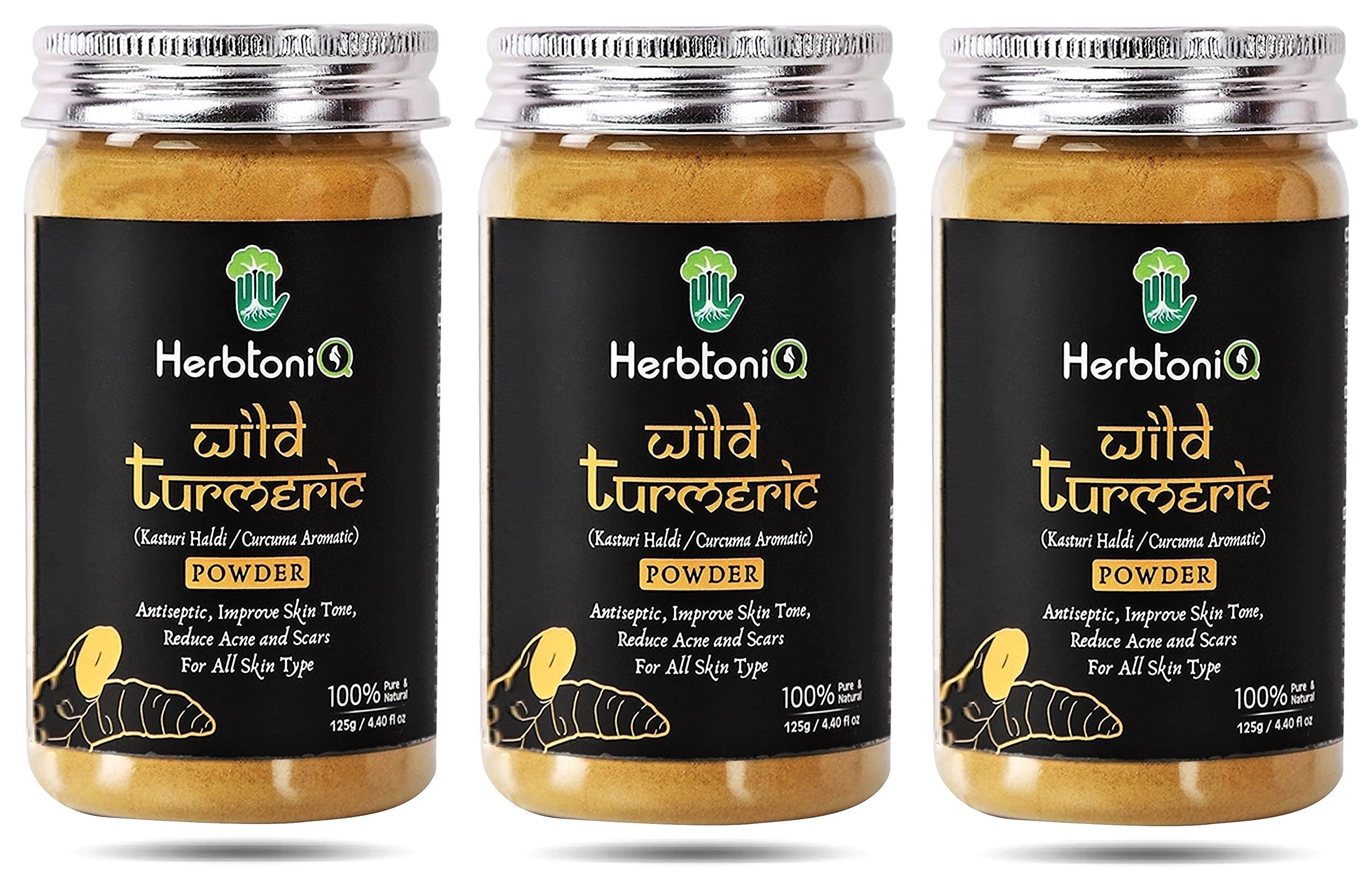
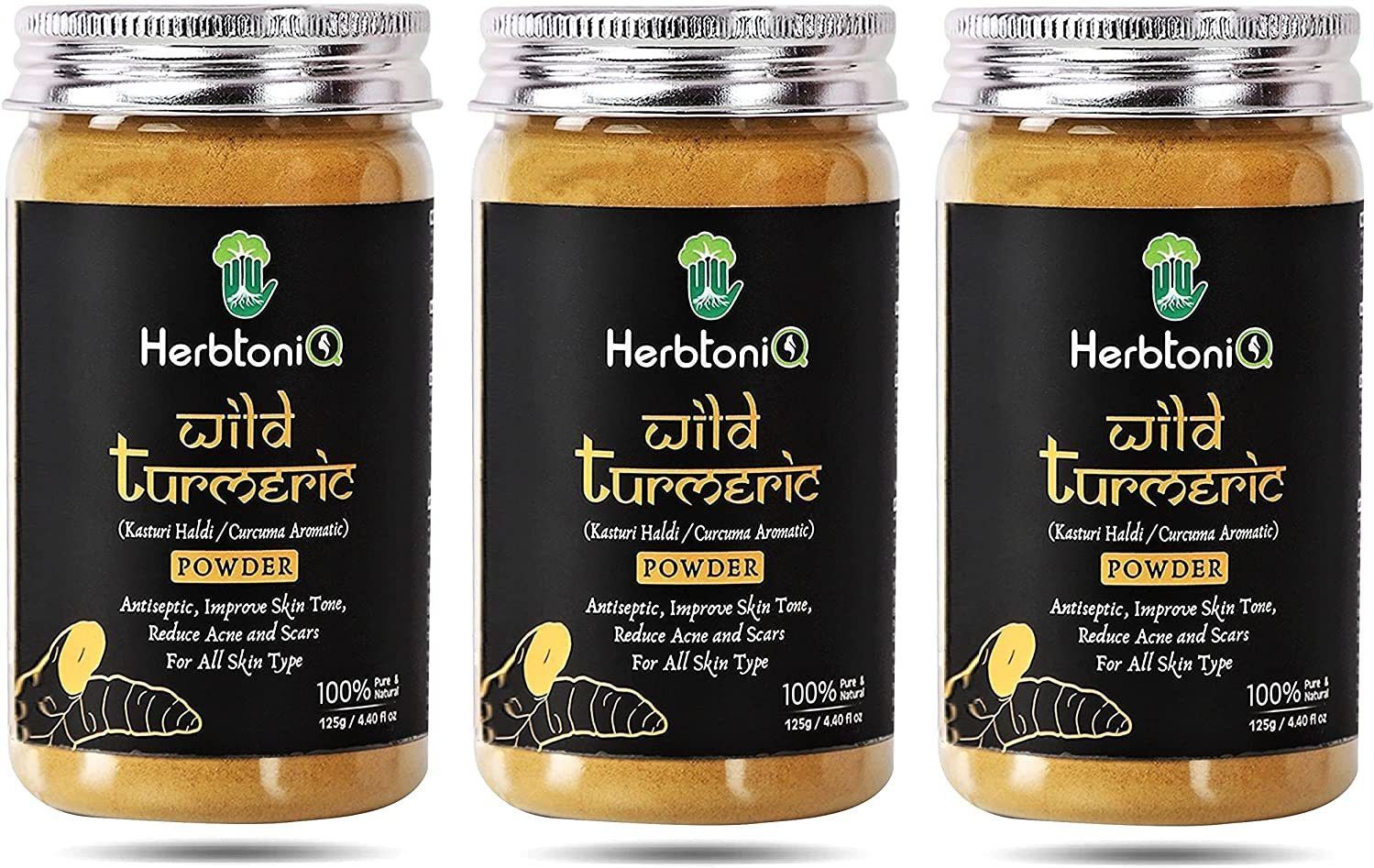
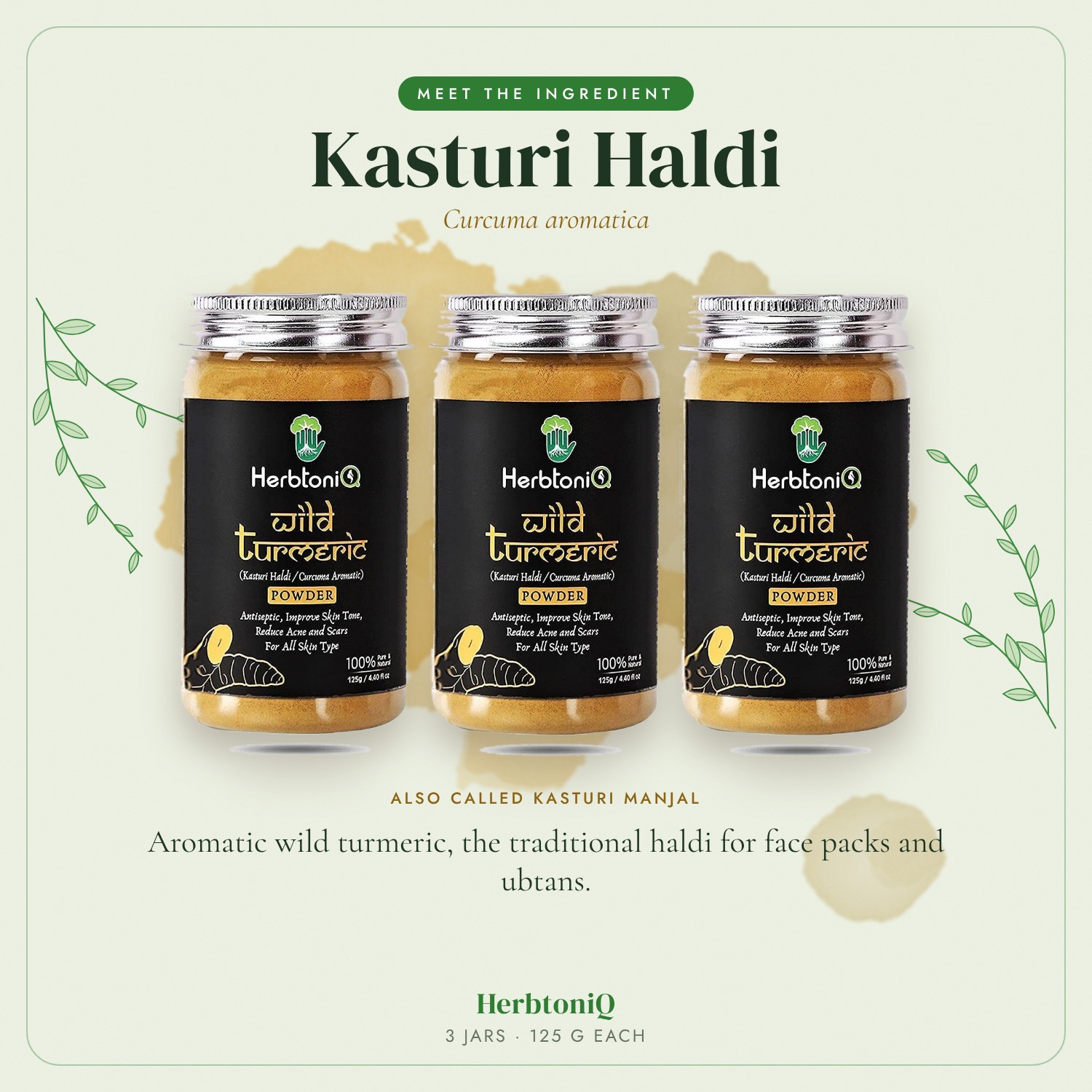
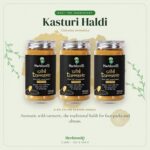

HerbtoniQ kasturi haldi powder is aromatic wild turmeric, the variety kept for the skin and not the kitchen. Called kasturi manjal in the South, it is the haldi of bridal ubtans and weekly besan packs, with a warm, camphor-like scent and a gentler colour than cooking turmeric.
Key Benefits
- Traditionally used in Ayurveda and in ubtans for naturally glowing-looking skin.
- Helps reduce the look of tan on face, arms and neck with regular use.
- Helps cleanse the skin when massaged on with besan or rice flour.
- Leaves skin feeling soft and smooth after rinsing.
- A little goes a long way, as a pinch is enough for most packs.
- Works for both face packs and full-body ubtan.
What’s Inside
3 jars of 125 g each, 375 g in total:
- 3 × Kasturi Haldi (Wild Turmeric) Powder, 125 g – the dried rhizome of Curcuma aromatica, finely powdered. Unlike regular haldi it is used only externally, and it has been part of Indian pre-wedding and festive skin rituals for generations.
How to Use
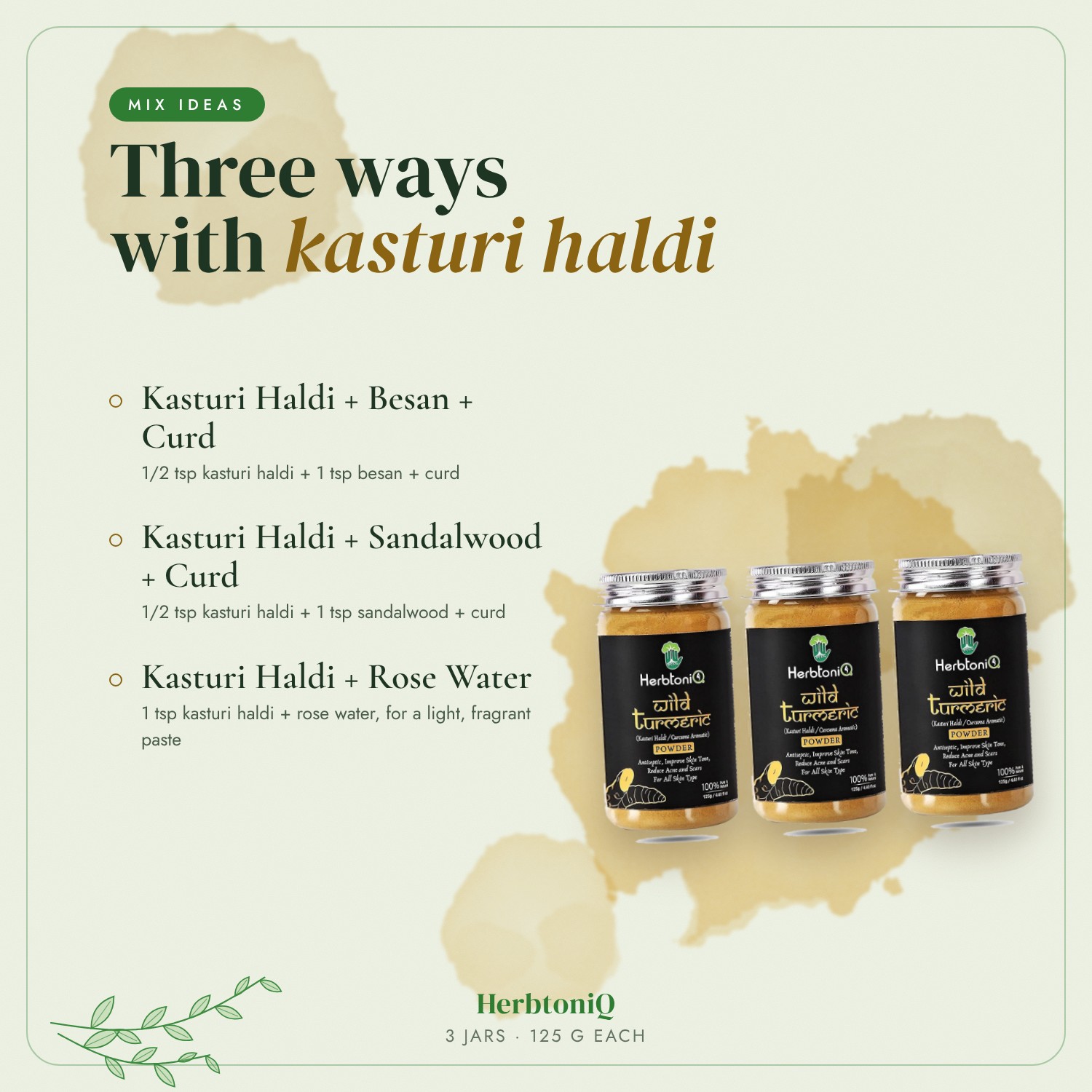
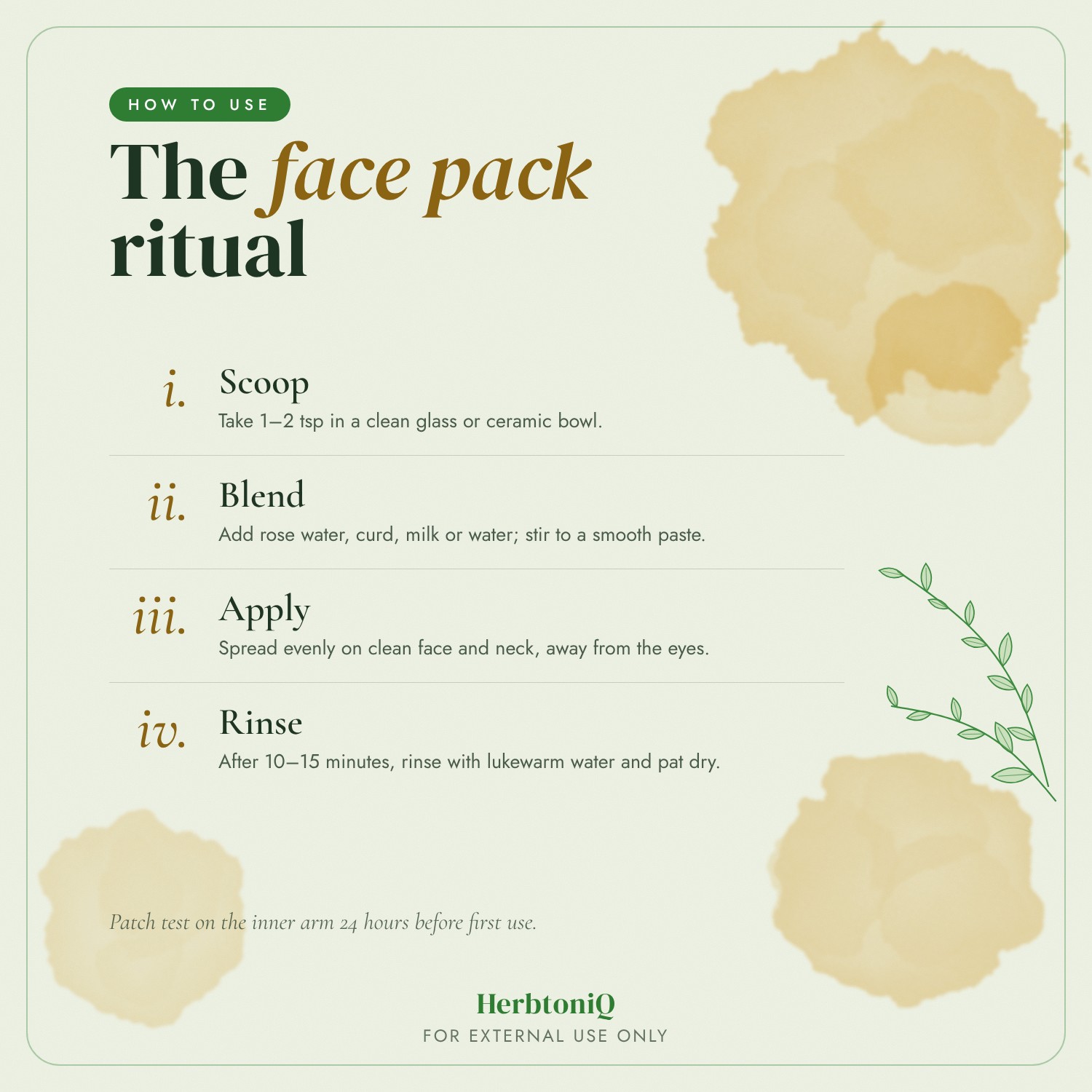
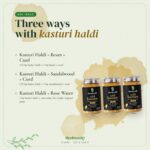
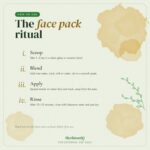
- Take ½ teaspoon of kasturi haldi with 1 teaspoon of besan, sandalwood or rice flour.
- Add curd, raw milk or rose water and stir to a smooth paste.
- Massage gently onto damp skin on the face and neck, or body, avoiding the eye area.
- Leave for 10–15 minutes, then rinse with lukewarm water.
- Use once or twice a week. Do a patch test on your inner arm 24 hours before first use; any faint yellow tint washes off with a mild cleanser.
Who Is It For
For men and women of all skin types who like traditional ubtan routines, and for brides and grooms preparing for haldi ceremonies. Dry skin does best with milk or curd as the mixer, oily skin with rose water.
Why HerbtoniQ
This is single-ingredient kasturi haldi, finely milled so it disperses evenly in your ubtan, and hygienically packed in India in three 125 g jars. It is for external use only and not meant for cooking.
FAQs
What is the difference between kasturi haldi and normal haldi?
Kasturi haldi (Curcuma aromatica) is an aromatic variety used for skin care, not cooking. It has a distinct scent and tends to leave less colour on the skin.
How do I make a kasturi haldi and besan ubtan?
Mix ½ teaspoon kasturi haldi with 1 teaspoon besan and enough curd to make a paste. Massage on damp skin and rinse after 10–15 minutes.
Can I use kasturi haldi on my face daily?
Once or twice a week is enough for most people. Use only a small pinch each time and follow with a moisturiser.
For external use only. Do a patch test before first use.

Reviews
There are no reviews yet.